

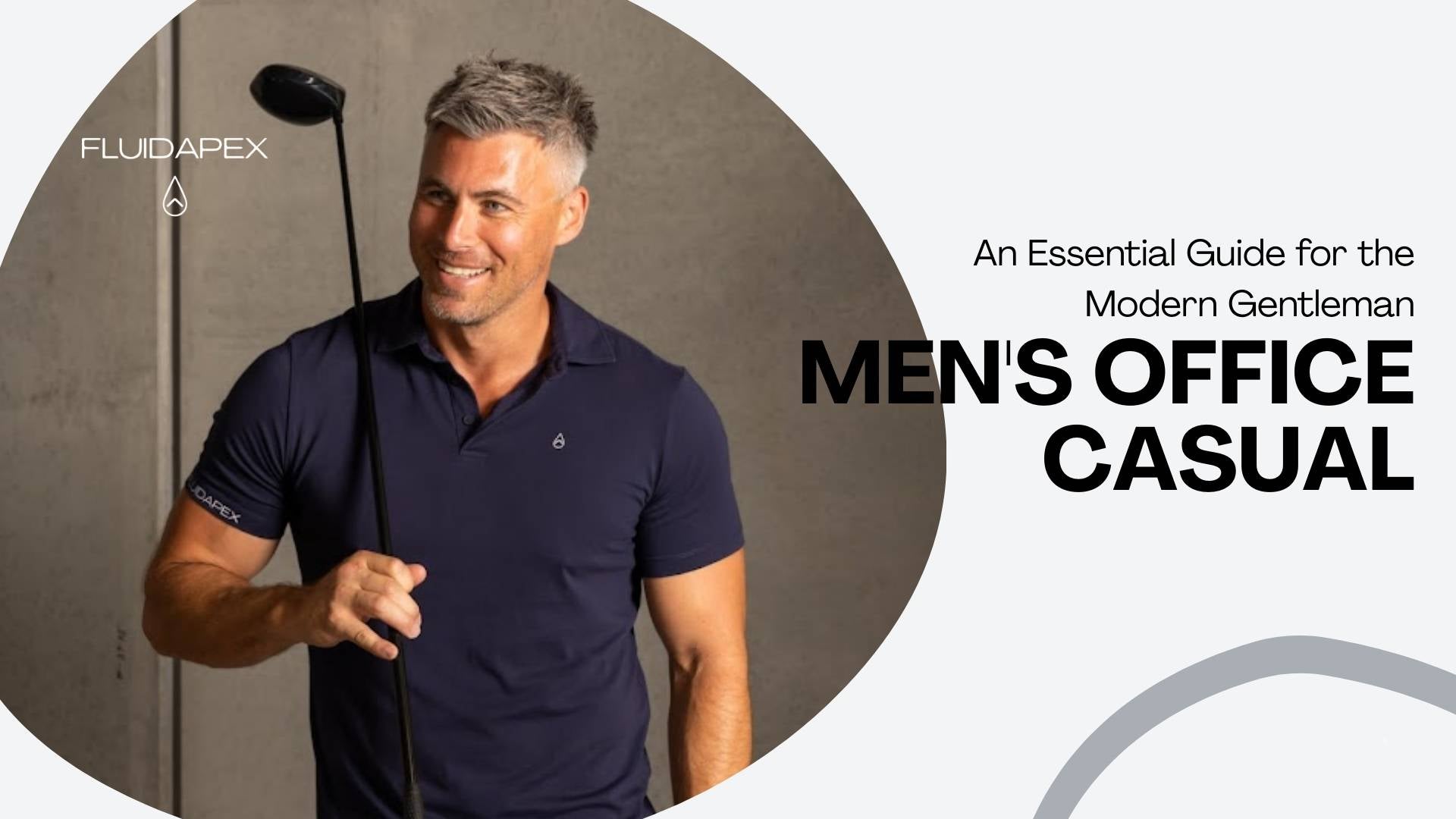
The world of work has evolved. Boardrooms now host creative brainstorming sessions, and commutes often end at cafés or home offices rather than towering skyscrapers. In this environment, the rigid suit‑and‑tie uniform is giving way to a more nuanced dress code – one that blends professionalism with comfort.
This is men’s office casual: a stylish middle ground where crisp tailoring meets relaxed silhouettes. This article unpacks the nuances of office casual and shows you how to dress with confidence from boardroom to benchpress.
Key Takeaways
- Office casual blends structure with comfort – It’s about pairing tailored pieces with relaxed items so your outfit looks intentional and polished while still feeling comfortable.
- Fit and fabric matter more than ever – Invest in well‑fitting, high‑quality garments; natural fibres and performance fabrics provide breathability and stretch for long days.
-
Build a versatile capsule wardrobe – A few smart trousers, polos, button‑downs, blazers and leather shoes can mix and match for countless combinations.
- Lean on neutral colours and subtle patterns – Dark solids and muted tones offer flexibility and professionalism; introduce interest through texture rather than loud prints.
Understanding Office Casual and Business Wear
What qualifies as “office casual”?
Office casual – sometimes called smart casual dress – marries elements of traditional business wear with everyday comfort.
Think chinos instead of suit trousers, unstructured blazers over polo shirts, and leather loafers instead of oxfords.
According to expert guides, business casual emerged from the “Casual Friday” movement of the 1960s and blossomed as tech firms in the 1990s rejected stiff corporate uniforms. The goal is to look polished and approachable without appearing underdressed.
Also read: Men’s Summer Fashion in 2026
The Modern Office Casual Guide
This guide outlines how to master the modern office casual dress code. It's about blending professionalism with comfort, creating a look that is both sharp and adaptable.

|
Style Profile |
Key Pieces |
Outfit Idea |
When to Wear |
|
The Modern Leader |
Quarter-zip sweater, chinos, loafers |
A navy quarter-zip (like in the first image) over a white tee, paired with tan chinos and brown loafers. |
Internal meetings, client lunches, after-work drinks. |
|
The Creative |
Textured blazer, dark jeans, boots |
A grey tweed blazer over a black tee, with dark indigo jeans and leather chukka boots. |
Creative client meetings, design studios, relaxed office environments. |
|
The Minimalist |
Unstructured suit, plain tee, clean sneakers |
A charcoal grey unstructured suit worn with a crisp white t-shirt and minimalist white leather sneakers. |
Presentation days, internal office days, tech companies. |
|
The Relaxed Professional |
Knit blazer, polo, tailored trousers |
A navy knit blazer over a grey polo shirt, paired with charcoal tailored trousers and suede derby shoes. |
Business casual offices, networking events, dinner. |
How it differs from formal business wear
The difference between office casual and formal business wear boils down to structure and formality.
Traditional business wear is built around matching suits, crisp dress shirts and often a tie. Office casual loosens the rules by allowing separates – such as a blazer with tailored chinos – and softer fabrics like brushed cotton or merino wool.
However, smart details like clean shoes and well‑pressed garments remain essential. As one style guide notes, dark jeans may qualify as business casual in certain settings, but they should be well‑fitting and free from rips.
Fit is non‑negotiable

Regardless of dress code, poor fit undermines style. Jackets should skim the shoulders without sagging; trousers should sit at the natural waist and break just above the shoe; shirts should allow room to move without billowing. The modern man values performance fabrics too – stretch weaves and moisture‑wicking blends keep you cool and polished during long days. When in doubt, visit a tailor.
Start building your office casual wardrobe with the Fluidapex Lightweight Short Sleeve T. Its subtle athletic cut and breathable fabric transition seamlessly from work to weekend.

Building a Smart Casual Wardrobe
Essential pieces for smart casual mens dress
Blazers & Jackets: Opt for unstructured or half‑lined blazers in wool, cotton or linen blends. Shades like navy, charcoal and olive pair well with multiple trouser colours. Avoid excessive padding – the look should be relaxed yet refined.

Shirts & Polos: A rotation of button‑down shirts in solid colours, micro‑checks and subtle stripes will see you through most workdays. For a relaxed feel, high‑quality polo shirts in merino or cotton pique provide a neat collar and breathable comfort.

Trousers & Chinos: Slim‑to‑straight‑cut chinos in neutral shades (navy, khaki, grey) are the backbone of office casual. Dark, well‑fitting jeans can work on less formal days but avoid distressed washes. Performance pants with built‑in stretch (like technical chinos) offer all‑day comfort.

Source: Joseph Turner Yorkshire
Shoes: Leather loafers, brogues, derbies and minimalist sneakers can all work depending on the office culture. Choose polished leather for formal days and suede for relaxed Friday outfits. Ensure shoes are clean and coordinate with your belt.

Origo: The Men's Everyday Sneaker (Natural Leather)
Layering and proportion

Layering adds depth and adaptability. Lightweight merino sweaters or quarter‑zip collars worn over a shirt provide warmth and visual interest. Structured outer layers like bomber jackets or shackets (shirt‑jackets) bridge the gap between blazer and casual jacket. A general rule: balance slim and relaxed pieces – pair a fitted jacket with slightly looser trousers, or slim chinos with a relaxed overshirt – to maintain a polished silhouette.
Colour palette and patterns

Neutral colours form the foundation: navy, charcoal, olive, camel and black. They project sophistication and are easy to mix and match. Accent colours like burgundy or forest green can be introduced through knitwear or accessories. Keep patterns subtle; micro‑checks, herringbone and small stripes add texture without distracting from your professional presence. Loud prints or graphics are better left for weekend wear.
Professional Style Guide
|
Situation |
Example Look |
|
Client Meeting (Smart Casual) |
A white button-down Oxford, an unstructured navy blazer, tan chinos, and brown leather loafers. |
|
Internal Office Day |
A heather grey quarter-zip over a navy polo, dark charcoal chinos, and white minimalist leather sneakers. |
|
Presentation Day |
A crisp white dress shirt, a charcoal blazer, matching tailored trousers, and dark brown leather Derby shoes. |
|
Casual Friday |
A plain black tee, an olive green corduroy overshirt, dark indigo (unwashed) jeans, and clean grey suede sneakers. |
|
After-Work Dinner |
A black knit crewneck sweater, olive tailored trousers, dark brown Chelsea boots, and a simple silver watch. |
Smart Casual Dress Men: Outfit Examples

Classic blazer with chinos
Pair a navy blazer with khaki chinos and a crisp white button‑down. Swap the tie for an open collar. Finish with brown brogues or loafers. This ensemble works for meetings, client lunches and after‑work gatherings.
Polished knit with tailored trousers
A fine‑gauge merino sweater layered over an oxford shirt creates warmth without bulk. Combine with grey wool trousers and leather Chelsea boots. A leather belt and watch complete the look. The knit lends comfort while the trousers maintain professionalism.
The elevated polo and tech pant
On relaxed days, choose a high‑quality polo and pair it with technical chinos – trousers crafted from performance fabrics that resist wrinkles and move with you. Add minimalist leather sneakers. This outfit demonstrates how modern fabrics optimise comfort without sacrificing style.
The Fluidapex Men’s 1/4 Zip Collar is an ideal layering piece. Its sleek silhouette and performance fabric elevate casual trousers and jeans alike.
Casual Smart Wear Men: Adapting to New Workplaces

Hybrid and remote work
With hybrid work patterns, clothing needs to transition smoothly between environments. Look for pieces that stay comfortable on video calls but still look sharp when you head to the office. A quarter‑zip sweater or lightweight blazer can dress up a simple T‑shirt when required.
Travel and commuting
For those who commute or travel frequently, versatility and durability are paramount. Wrinkle‑resistant fabrics and secure pockets are invaluable. Pair a travel blazer with stretch chinos and a moisture‑wicking T‑shirt. Finish with comfortable leather sneakers. A functional bag keeps essentials organised.
The Fluidapex Tactical Men’s Gym Bag features six compartments and convertible carry styles, making it perfect for storing your laptop, workout gear and daily essentials. It epitomises our “boardroom to benchpress” ethos.
You may also like to read: What’s the Perfect Bag for Gym + Work?
Seasonal considerations
In summer, switch to lighter fabrics like linen blends or tropical wool. Roll sleeves and choose loafers or clean sneakers. In winter, layer with merino sweaters, quilted vests and topcoats. A muted scarf adds warmth and style. Always adjust layering to suit your climate and activity level.
Business Wear Men vs Office Casual

Photo Source: Lookastic
When to dress up
Certain occasions still call for traditional business wear: important client meetings, board presentations or formal networking events. In these cases, a well‑tailored suit in dark navy or charcoal paired with a crisp shirt and tie signals authority. The distinction between office casual and formal wear is context – always err on the side of formality if unsure.
Bridging the divide with accessories
Accessories let you adjust the formality of your outfit without a complete change. Add a tie or pocket square to elevate a blazer‑and‑chino combination.
Swap sneakers for leather loafers. Carry a structured leather briefcase instead of a backpack. These small tweaks move an outfit along the scale from casual to professional.
Performance fabrics and sustainability
Modern office attire benefits from performance fabrics that wick moisture, resist wrinkles and stretch. Seek out garments made from sustainable fibres such as organic cotton, bamboo or recycled polyester. Investing in quality reduces waste and ensures pieces last longer. Consider brands that emphasise ethical production and environmental stewardship.
Dress codes in different industries
Not all offices interpret “casual” the same way. Creative industries may tolerate jeans and sneakers, while finance or law firms expect more traditional attire. Observe colleagues and mirror senior leadership styles. When in doubt, consult your company’s policy or ask HR.
Caring for your garments
Extend the life of your wardrobe with proper care: follow washing instructions, air‑dry shirts and sweaters to prevent shrinkage, and rotate shoes to allow the leather to rest. Use quality hangers for jackets and sweaters to maintain shape. Regularly polish leather shoes and condition them to prevent cracking.
Confidence and personal expression
Dressing well isn’t solely about external perception; it fosters confidence and influences how you feel and perform. Develop a personal style that aligns with who you are – whether that means favouring earth tones or minimalist monochrome. The key is consistency and authenticity.
Wrapping Up
Navigating the modern office dress code requires a blend of intention and adaptability. By investing in quality pieces, mastering fit and embracing a neutral colour palette, you can confidently switch between formal and relaxed settings. Remember: clothing should support your ambitions, not distract from them. With the right wardrobe and mindset, you embody the Fluidapex philosophy of being unstoppable at your peak – poised, powerful and ready for whatever your day holds.


